Meet Kari Baragrey

When Kari Baragrey first learned about Trust-Based Relational Intervention® (TBRI®), she was seeking help for meeting the needs of her son, admitting she knew they weren’t dealing with anything they would be able to solve on their own. When Kari came across TBRI, she found there was only one TBRI-trained therapist in Michigan, where she lives, and she lacked the credentials to access TBRI herself. Several years later, after beginning her role as Foster Care Navigator at Wellsprings Lutheran Services, Kari found herself in a training she quickly realized was TBRI.
“This was a full-circle moment for me that felt sacred,” Kari explained. “I knew God was doing something. I committed to implementing a couple of simple strategies I learned that day immediately when I walked through the doors of my home. I met my then 18-year-old son with soft eyes and touched his arm when I asked about his day. For the first time in over 16 years, my son responded to me. There was a softness I had never seen. I knew I needed to immerse myself in learning more of TBRI and pass these tools along to the families I was now supporting.”
In her role as Foster Care Navigator, Kari works in 22 counties in Northern Michigan through a contract with the state. She not only represents the Michigan Department of Health and Human Services but also private agencies, serving as a support between the social workers and families.
“My number one priority is to be a support to our kinship, foster, and adoptive families,” Kari shared. “During our personal journey with fostering and adoption, the role of navigator did not exist. However, we had a phenomenal support system with our case worker, licensing worker, health department staff, and medical staff. On the days when I was barely staying afloat, our ‘team’ was our lifeline. I love that I am now able to give back and be part of that support to others.”
A year later, Kari was given access to Hope for the Journey, and for the two months she had access, she watched each session multiple times.
“I shared strategies I was learning with the struggling families I was supporting. However, my knowledge was very limited,” Kari said. “I anxiously awaited April 2025 when the new version of Hope for the Journey training would roll out. I knew I not only wanted this for myself (12-month access seemed like a dream!) but also our families in Michigan.”
When hopeforthejourney.com launched, Kari advocated for the use of Hope for the Journey not only through Wellsprings Lutheran Services, but also through the Michigan Department of Health and Human Services, and all of the private agencies across 75 percent of the state.
“Working with our caregivers, many times in crisis, I see the need firsthand that our families need to be equipped with the tools of TBRI,” Kari said. “The power of this training within the walls of our families’ homes—to watch and rewatch as many times as they need—truly is bringing peace and joy back to our families.”
Through her initial planning for Hope for the Journey, Kari met with Show Hope Director of Programs Justin Myers. On that call, Justin asked Kari to share her TBRI dreams, and Kari shared she would someday like to become a TBRI Practitioner herself.
“He encouraged me to apply for the training when I was ready and told me about the grant opportunity through [Show Hope]. Everything about this ultimate dream of mine seemed too much, in good and hard ways,” Kari shared. “The possibility of having this opportunity when I didn’t have access 10 years ago was above and beyond anything I could have hoped for or imagined. Without Justin’s encouragement and direction, I would have allowed the cost to discourage me and honestly, probably would not have applied with the KPICD.”
Kari applied, was accepted, and received a grant for the November 2025 TBRI Practitioner Training. After completing the training, she already has even bigger dreams and has already been asked to host multiple trainings throughout the state.
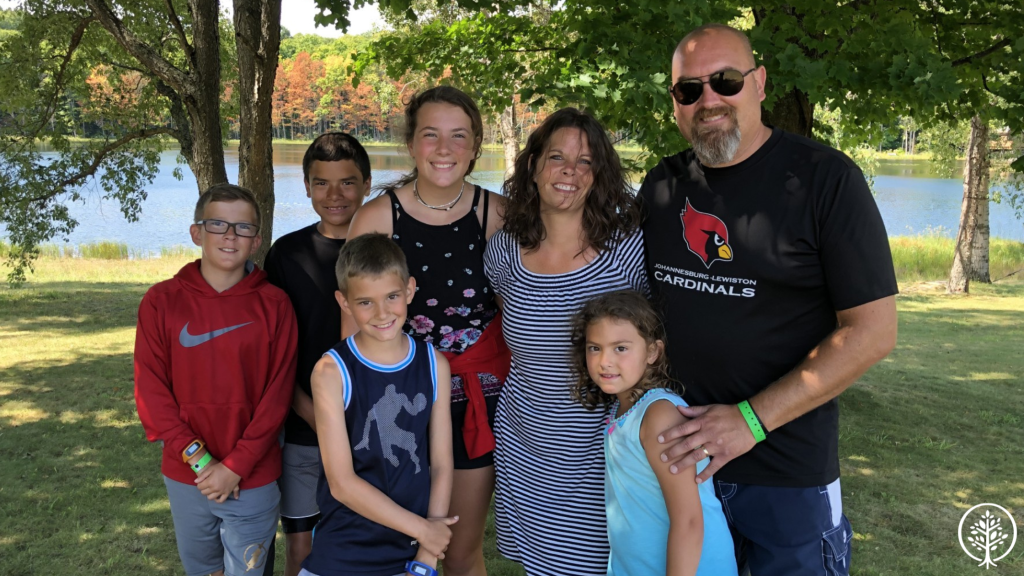
“TBRI is helping me to advocate and be the voice of our children who have experienced trauma. TBRI teaches us to look beyond the behaviors to the why. When we can do that, our empathy and compassion greatly increase, Kari said. “I am starting to see a shift in these conversations with caregivers. I’m helping them to understand the trauma, and by the end of these calls, I hear more compassion and softness. I’m able to give them strategies to help with their behaviors, always encouraging them towards connection.
“I come from a place of understanding because of my own story and struggles. I often feel our families trust me because of this shared experience, which helps me to press in a little more,” Kari continued. “I have so much to learn, but I am already seeing the great impact that TBRI is making with our families.From the bottom of my heart, thank you. Thank you to Show Hope, Hope for the Journey, and Justin Myers. I often think about Steven and Mary Beth Chapman, their relationship with Karyn Purvis, and their hearts in seeing the need to teach TBRI to our families caring for our vulnerable children.”
This Christmas, we have strategically planned to raise $1,000,000 for the continuing impact of our work, yet we cannot reach that goal without you. Today, will you prayerfully consider a gift to our Gifts of Hope campaign? We need you.